


The Weekend Read
/
November 28, 2026
Rafael Manuel’s debut film, Filipiñana, demonstrates how the American sport’s export to the Philippines helped shape the colony in our country’s mirror image.
Rafael Manuel’s debut film, “Filipiñana,” demonstrates how the American sport’s export to the Philippines helped shape the colony in our country’s mirror image.
There’s a Statue of Liberty in the Philippines. She’s shorter than a refrigerator and matte-plaster white. Her torch is a caged light bulb. She illuminates the bowl of a small amphitheater at Camp John Hay, a former American military reservation nestled high in the mountains of Baguio. When she was installed there in the early 1980s, my mom was studying at the college campus nearby, and my dad was down the mountain at the neighboring US air base, on his first overseas military assignment. I came along later, after my parents met and moved away, but I’d return as a child and have a vague memory of little Lady Liberty. With her tablet in hand, she surveys the grounds near one of the Philippines’ oldest active golf courses, but her stature reads more putt-putt than PGA.
Despite being introduced to the islands over a hundred years ago, golf is still quite niche in the Philippines, completely eclipsed in popularity by basketball and boxing. Between the country’s year-round heat and humidity and the sport’s unforgiving landscape—one vast clearing after another—golf in the Philippines is a hard sell. It’s also very expensive. The median income in the nation’s capital, Metro Manila, is the equivalent of about $6,000 USD per year. Meanwhile, a single round of golf can run around $100 USD, not including the cost of equipment. As a result, in the Philippines, these clubs cater mostly to international tourists and the country’s wealthy ruling class.
This is the world at work in Filipiñana, the stunning debut feature film from Rafael Manuel, which tells the story of a young woman navigating her first day as a “tee girl” at a luxury golf club in Manila. Her name is Isabel, and her job is to place golf balls at the feet of players on the driving range, risking serious injury with every practice swing (a real job at some clubs in the Philippines). As she moves through the grounds, we are treated to a parade of the many comforts provided by and simultaneously held squarely out of reach of the club’s service staff. The film is an odyssey of inequity, which pays homage to Jacques Tati and Lino Brocka in equal measure.
The film burns slowly, with precise, lingering tableaus that leverage the controlled beauty of the golf course as a metaphor for structural violence. It opens with the kind of social realist scene that has become more or less expected from Philippine cinema: An entire drought-striken neighborhood is lined up, waiting to fill their buckets and repurposed gasoline jugs with rations of water. Neighbors struggle and shout over one another, fearful that their families might not have what they need to cook and clean, bathe and drink. But then the camera cuts to a golf course, where a series of sprinklers turn on, drenching the verdant hills of the fairway. Against the previous scene, this banal grandeur feels sinister, and its broad familiarity serves as a quiet indictment, so scrubbed of any sign of life beyond the club’s gates that it could be anywhere from Manila to Mar-a-Lago.
Golf was an American export. When the Philippines was a US colony, its American governors discovered that Baguio, a town 150 miles north of Manila in the Cordillera mountains, had a brisk, breezy climate, making it an ideal respite from the tropical heat and humidity everywhere else in the country. William Howard Taft, then the governor-general of the Philippines, compared it to the Adirondacks. (My great-grandparents lived in the Cordillera mountains when they were young, though my family has since relocated to a lowland town nearby. Whenever we make the trip back, my lola always pushes a sweater into my hands before we leave, bracing for the cold air.) For this reason, the Americans came to know Baguio as “the Summer Capital of the Philippines,” and opened a country club with an 18-hole golf course there at Camp John Hay.
But golf was only a small part of the Americans’ imperial project in the Philippines. Elsewhere on the islands, the US army worked to suppress local resistance to their takeover, burning villages and killing more than 200,000 Filipino civilians in the process. Afterward, Filipinos were urged, through military force and paternalistic institutional reform, to adopt and imitate American ways of life. Meanwhile, law enforcement back in the states began to resemble the counterinsurgency tactics tested in the Philippines. It wasn’t long before the cultures of mainland America and its largest colony started to mirror each other.
Current Issue
There’s a scene in Filipiñana where the golfing parties break for lunch and the club’s president, Dr. Palanca, serenades his captive audience with an old ballad. Watching it for the first time, I felt an irrepressible rush of tears well and fall and dormant rage light up in my chest. My mind went immediately to Imelda Marcos, the former first lady of the Philippines, who made a habit of performing schmaltzy love songs at public appearances with seemingly little regard for context. She sang at political rallies and her husband’s death bed. At one point, while she was actively under investigation for US federal racketeering charges, she even released an album.
In recent years, I’ve thought of her performances more often than I’d like, reminded of them constantly as the line between entertainment and governance gets blurrier and blurrier, in the Philippines as in the United States’ own Republican Party. Their echoes are everywhere. Senator and former chief of police Bato dela Rosa singing on the campaign trail, and then, again during a press conference after the ICC issued a warrant for his arrest, while Vice President Sara Duterte debuted an original dis track at a rally in Japan. I see the same kind of performance in Donald Trump’s 24-hour circus act: driving a garbage truck, wearing a McDonald’s apron, pumping his fists to “Y.M.C.A.” Whether they’re addressed earnestly or lampooned, these slivers of cosplay spread like wildfire, seemingly softening the despots’ edges.
In Filipiñana, Dr. Palanca croons, “You always hurt the one you love, the one you shouldn’t hurt at all.” The lyrics rang in my ears long after I left the theater; gesturing toward the subtle ways we normalize violence. They reflect a certain kind of coercive rhetoric that the American colonial rulers of the early 1900s used to deflect concerns about Filipinos’ right to national sovereignty. From very early on, American imperialism in the Philippines wasn’t just unpopular with Filipinos but mainland Americans, too, who argued that ruling an overseas empire violated fundamental American ideals of self-government. But condescending, white-supremacist ideas like William McKinley’s “benevolent assimilation” and Taft’s “little brown brother,” which characterized Filipinos as incompetent and childlike, were circulated to bend public opinion toward acceptance, portraying American control over the country as a “civilizing” mission that was both necessary and good for Filipinos.
In 1972, the late Filipino dictator Ferdinand Marcos used similar framing to justify his declaration of martial law. Nearing the end of his second term as president, Marcos took military control of the Philippines—in his words, “to save the republic and reform society.” This decision cleared the runway for Marcos to extend his presidency indefinitely, to squash his political opposition, and to plunge the country into unchecked kleptocracy, cronyism, and human rights abuses for the almost-15 years that followed. His proclamation was televised into homes and businesses across the archipelago, and at a key point during its broadcast, he looked straight into the camera with soft eyes, assuring the Filipino people that this was all for their benefit: “All that I do, and we in government must do, is for the republic and for you.” He pointed through the screen, closing the distance between himself and anyone watching. It was all I could think about while watching Filipiñana, as Dr. Palanca finished his song: “If I broke your heart last night, it’s because I love you most of all.”
Marcos, like Trump, had a soft spot for golf. He organized tournaments, created a national golf foundation, and proposed his own golf course just four miles away from Camp John Hay. While in power, he and Imelda, whom he appointed to multiple official government roles, used public funds to carry out opulent, narcissistic construction projects, reshaping the landscape of the Philippines in their image. Their political opponents called it an “edifice complex.” Along the highway leading to Baguio, they made plans for their own sprawling Marcos Park, which would include a country club, golf course, sports complex, and luxury hotel. But first, they built its centerpiece: a 90-foot concrete monument to Ferdinand Marcos’s face.
My family has driven by this site countless times, but I’ve never actually seen the bust intact; it was defaced almost as quickly as it was erected. From the beginning, Marcos Park was met with resistance from the Indigenous groups who were being driven out of their homes and farmland for its construction, chiefly the Ibaloi who were coerced to sign deeds of sale drafted up by the Marcos administration’s Philippine Tourism Authority. In 1986, after Marcos was ousted by a popular revolt and airlifted into exile in Hawaii, the bust was pumped with dynamite and covered in blood to exorcise his spirit. More than a decade later, it was bombed again, blowing off its ears, nose, and eyes, but this time, new explanations for the damage began to emerge. In interviews, the Marcos family pointed not toward activists but looters—“treasure hunters” in their words—who they suggested were acting on rumors that gold was stashed inside the bust.
In 2022, Ferdinand “Bongbong” Marcos Jr., who has never once broken rank with his late father, was elected the 17th president of the Philippines. In the months leading up to that election, there were a proliferation of TikTok videos glamorizing his father’s regime, which circulated photos of Ferdinand and first lady Imelda at the height of their 20-year rule, dressed for black-tie galas and dancing with foreign dignitaries. The videos portrayed this time—when the Marcos family was siphoning away billions in government funds and murdering dissenters by the thousands—as some kind of golden era to which the Philippines should aspire to return. They stoked the flames of cultural amnesia and seemed to say, “Make the Philippines great again.”
Popular
“swipe left below to view more authors”Swipe →
The concrete bust of Ferdinand Marcos Sr. and the miniature Statue of Liberty at Camp John Hay were both revealed in 1981, just nine miles apart, about the distance you might walk during a full round of golf. The former’s debut was unplanned, unveiled ahead of schedule by a typhoon that ripped through the mountains, but the latter arrived with all the fanfare of a US military dedication ceremony.
It was an interesting year for the country. In January, Marcos issued a proclamation that technically lifted martial law but allowed him to retain most of his powers. It was in essence a performance, timed ahead of Pope John Paul II’s visit to the Philippines and the inauguration of Ronald Reagan. In April, he gained approval for a six-year presidential term, an end to term limits, and called for a presidential election to take place in June, the country’s first in over a decade. There were 13 candidates on the ballot, with a measly two months to campaign. Marcos won by 88 percent of the vote and was inaugurated within weeks of the election. Then–Vice President George H.W. Bush, who was in attendance, commemorated the event: “We love your adherence to democratic principles and to the democratic process.” Failing to flatter Marcos could have jeopardized the United States’ access to military bases in the Philippines, which was up for review in 1984.
However inadvertently, perhaps this charade reveals something true about the “civilizing” projects of colonial regimes. No matter how convincingly they might spin it, colonial powers never actually want their subjects to become exactly like them; that would betray their assumed supremacy. Instead, colonial powers trap their subjects in a loop of mimicry, giving just enough instruction or leeway to perform as they desire, while retaining access to exploit the subjects’ resources, whether those are raw materials, strategic geography, human labor, or a living laboratory for new systems of control.
Early on in Filipiñana, two characters, young women who appear around the same age, discuss the differences between golf courses in the Philippines and the United States. One is an expat from New York visiting her uncle in Manila; the other is her caddy, for whom the news that American courses don’t provide all their amateur golfers with someone like her comes as a shock. “But who carries your bag?” she asks, struggling to process. The enforced hierarchy she lives within is so ordinary, so assumed, she expects it to exist everywhere, especially in America. It’s not hard to imagine why.
Watching this film, I had the surreal, disorienting feeling of standing between two mirrors. That uncanny sensation of being at the center of a tunnel of your own reflection repeated, of seeing your back and your face at the same time. Only, as I take in the golf course’s insidious beauty, its staff’s mass inertia in the face of inequity, its leaders’ gaslighting and the collective forgetting that comes with it, I feel like I’m seeing the Philippines’ past and a version of America’s future all at once.
Make no mistake, Filipiñana tells a distinctly Filipino story, the present fallout of an imperial boomerang launched into the Philippines over a hundred years ago. But for American audiences who watch thoughtfully, they may identify startling similarities to their own political reality as well, as inequities, ever present, never cease to surprise us.
More from The Nation
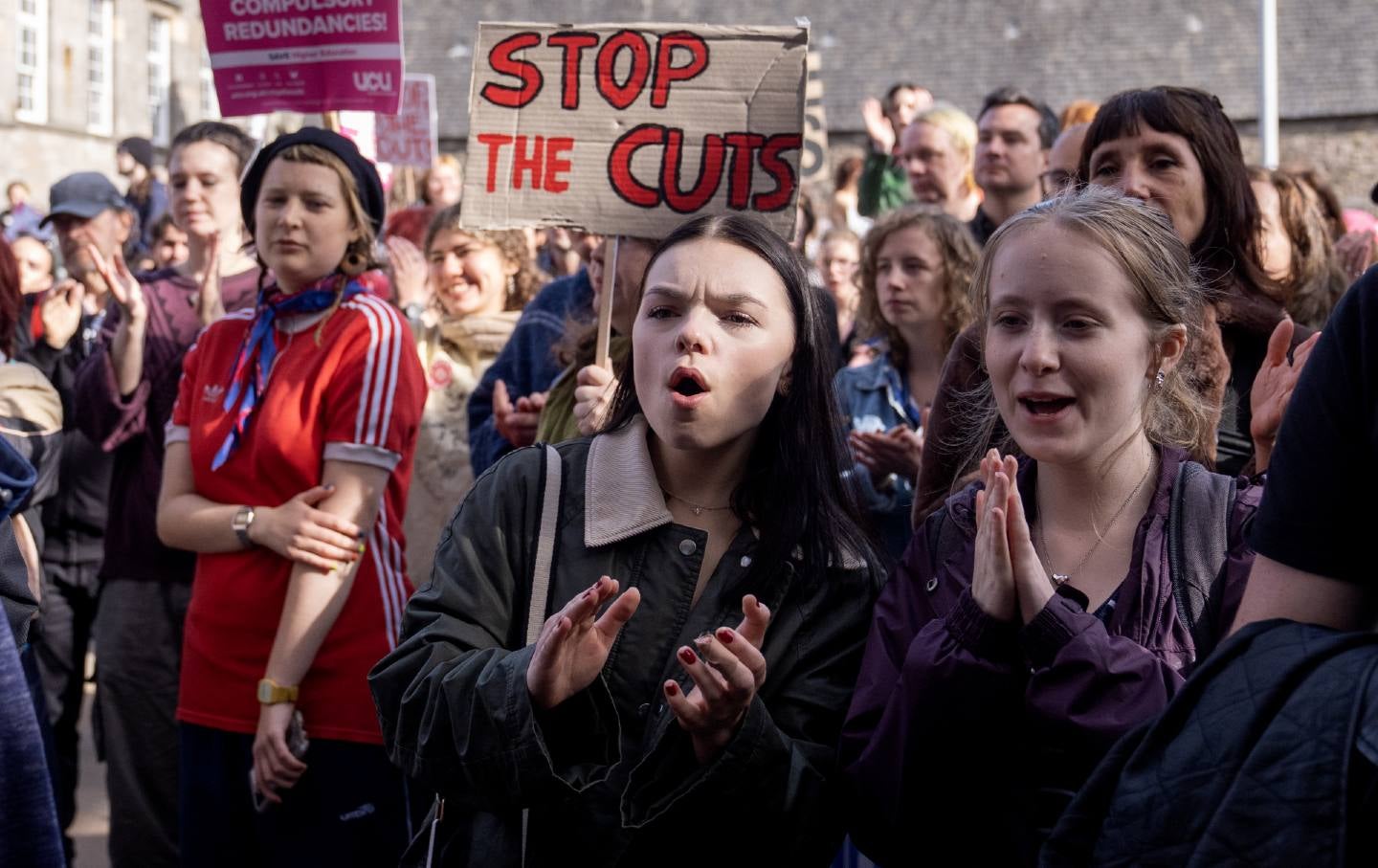
The University of Edinburgh’s £140 million cuts threaten the institution’s intellectual life and Scottish identity. Students and staff are fighting back.
StudentNation
/
Henry Fernandez
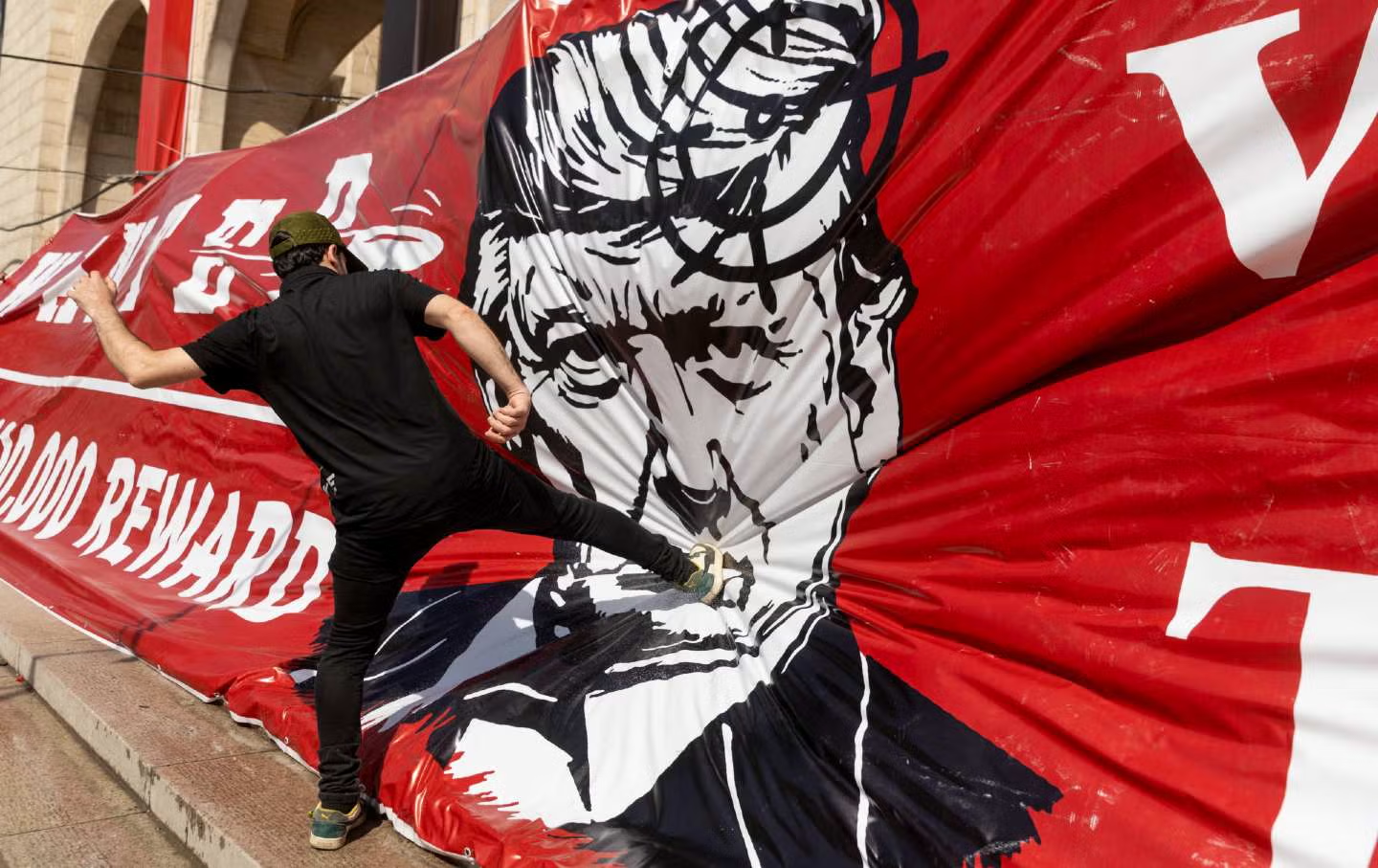
The president’s senseless war of choice has left him without any good choices.
David Faris
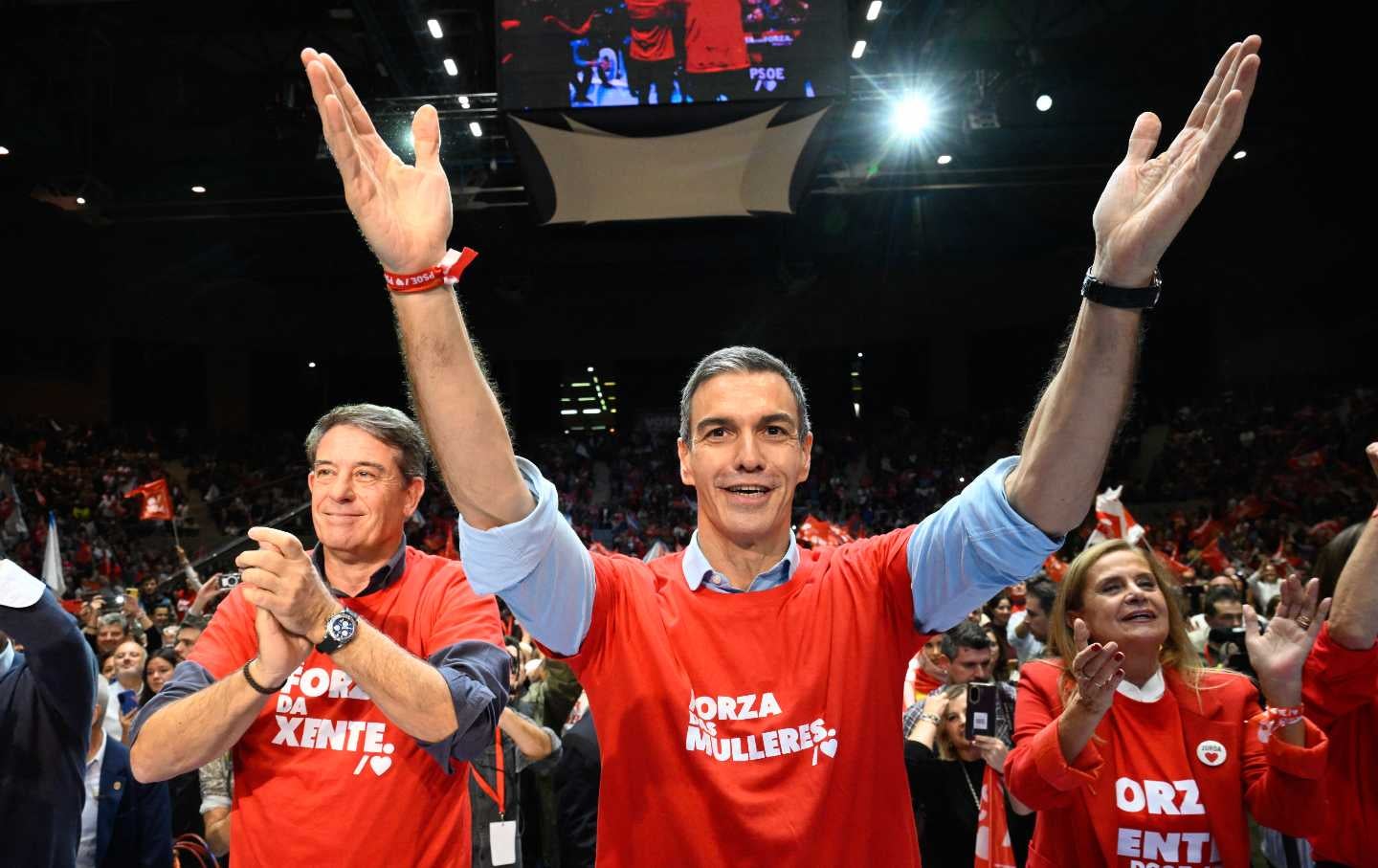
Pedro Sánchez’s coalition has been an exception to Europe’s reactionary turn. What went wrong?
Pablo Castaño Tierno
Spain’s progressive prime minister has defied political gravity over and over again. But this Sunday’s election might be his last act.
Sebastiaan Faber and Bécquer Seguín
A growing group of US deportees is documenting their new, post-deportation lives on social media, revealing the human cost of our Kafkaesque immigration system.
Iliana Hagenah
The Strip is buried under 61 million tons of rubble. Some people are finding creative ways to use it as a resource.
Hassan Herzallah

